Rain, Rescheduling, and Real Money: How Asia's Wild Weather Is a Hidden Edge for Aussie Punters
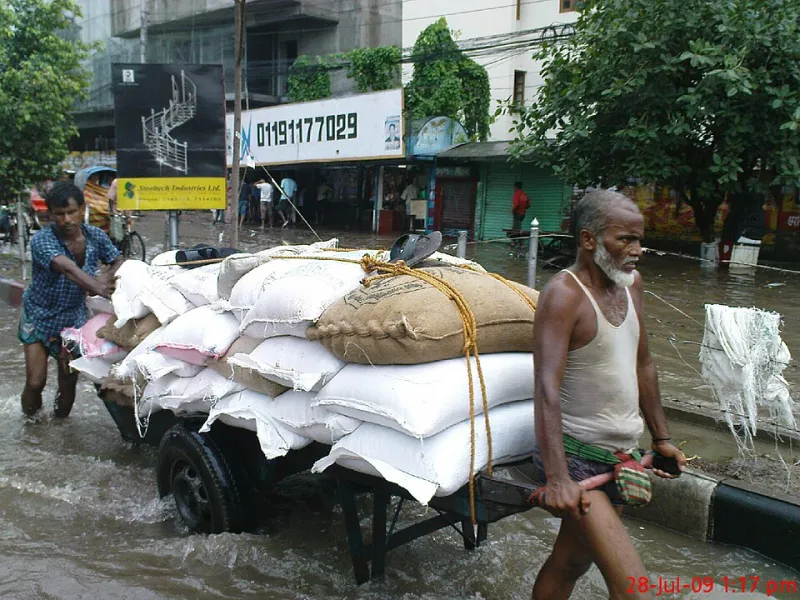
Photo: Shoreful, CC BY-SA 4.0, via Wikimedia Commons
Australia knows a thing or two about extreme weather. Bushfire smoke rolling across Sydney, flash flooding in Queensland, hailstorms shutting down Melbourne's road network — we live with it. But when it comes to betting on Asian sports markets, most Aussie punters completely ignore the meteorological factor playing out across Southeast Asia every single year like clockwork.
That's a mistake. And honestly? It's an opportunity.
While the average punter is drilling down on injury reports and recent form, a quieter force is reshaping schedules, shifting odds, and creating genuine inefficiencies across Asian betting markets. That force is the monsoon — and its close relatives: typhoons, tropical storms, and seasonal flooding events that define life across the Asia-Pacific from roughly May through November.
If you're an Aussie player on a platform like Lucky Bet Asia with access to regional markets, here's what you're probably missing.
What the Monsoon Season Actually Looks Like on a Betting Calendar
Southeast Asia's monsoon season isn't a single event — it's a rolling, region-by-region weather pattern that sweeps across different countries at different times. The southwest monsoon typically hits India and parts of South Asia around June, then works its way through Myanmar, Thailand, Vietnam, and the Philippines across July and August. By September and October, the northeast monsoon is shifting moisture patterns again.
For sports bettors, this matters because:
- Outdoor cricket fixtures in India, Sri Lanka, and Bangladesh get washed out or delayed with surprising frequency during this window
- Football leagues in Vietnam, Thailand, and the Philippines frequently deal with waterlogged pitches, postponed matches, and venue changes
- Cycling, motorsport, and athletics events across the region face cancellations that ripple through tournament brackets and qualification pathways
Odds compilers at major bookmakers are sophisticated — but they're also building lines based on historical data and form. When a last-minute weather event forces a match postponement or venue switch, the initial market reaction can be slow, especially in smaller regional competitions that don't get heavy analyst attention.
That's your window.
The Typhoon Factor: When Markets Overreact (and When They Don't)
Typhoons are the more dramatic, higher-profile version of the weather disruption story. The Philippines, Taiwan, Japan, and southern China sit in the world's most active typhoon corridor. In a typical year, the western Pacific generates more named tropical cyclones than any other ocean basin on Earth.
When a Category 4 typhoon is bearing down on Manila, betting markets for any event scheduled in or near the affected zone tend to move — but not always rationally. Here's what experienced regional punters have observed:
Overreaction scenarios: A typhoon tracking toward the Philippines causes markets to price in cancellation risk for an event in Cebu — but the storm tracks north and the event runs without issue. If you'd backed the 'event proceeds' outcome early in that window, you'd have gotten value odds on what turned out to be a near-certainty.
Underreaction scenarios: A typhoon that looks like it'll miss Taiwan directly still generates torrential outer-band rainfall that makes a venue unusable. Markets don't fully price this in because the storm's eye isn't directly overhead. The event gets called off anyway.
The point isn't that you'll always be right. It's that weather creates pricing inefficiencies — and those inefficiencies are exploitable if you're doing homework that the average punter isn't.
Using Meteorological Data as a Contrarian Research Tool
So how do you actually build this into your betting process? It's more straightforward than it sounds.
Step 1: Know the seasonal calendar. Bookmark the general monsoon and typhoon season windows for the regions you're betting on. India and Sri Lanka cricket fans already do this instinctively — expand that thinking to Southeast Asian football and regional athletics.
Step 2: Follow free meteorological resources. The Japan Meteorological Agency (JMA) publishes typhoon tracking data that's genuinely excellent. The Indian Meteorological Department (IMD) covers monsoon progression in detail. Weather Underground and Windy.com give you granular local forecasting for specific cities and venues. These are free tools that most punters aren't using.
Step 3: Cross-reference event schedules with weather windows. If you're looking at a fixture in Ho Chi Minh City in late September, check the 10-day forecast. If there's a tropical depression developing in the South China Sea, that's worth factoring into your decision — not just on whether the event runs, but on how teams might be affected by training disruptions, travel delays, or playing surface conditions.
Step 4: Watch for market lag. Asian regional sports markets, particularly for lower-profile domestic league games, often don't update odds as quickly as European football markets. When weather news breaks, there can be a short window where the price hasn't moved yet. Act in that window, not after.
A Real-World Example Worth Understanding
During the 2022 Southeast Asian Games, several outdoor athletics events in Vietnam were impacted by persistent rainfall that fell outside the official typhoon season but was directly linked to a tropical depression stalling over the Gulf of Tonkin. Event schedules shifted, some results were declared void, and punters who'd backed certain athletes based on standard form guides found themselves in murky territory.
The bettors who'd tracked the weather pattern had already adjusted their positions or avoided the market entirely. The ones who hadn't were caught flat-footed.
This isn't a once-in-a-decade scenario. It happens every year, across multiple events, in multiple countries. The weather in Southeast Asia is not an edge case — it's a structural feature of the regional sporting calendar.
What Australian Bettors Are Actually Well-Placed to Do
Here's the interesting thing about Aussies approaching this angle: we're not complete strangers to weather-affected sport. Anyone who's watched a Boxing Day Test match get interrupted by storms, or seen an AFL final played in conditions that turned it into a lottery, understands intuitively that weather changes the game.
The mental model is already there. It just needs to be applied to Asian markets.
Aussie punters also tend to be comfortable with research — we're a nation that takes sport seriously and puts genuine time into understanding what we're backing. Layering meteorological data into that research habit isn't a massive leap. It's just pointing the same analytical energy at a factor most of the competition is ignoring.
On a platform like Lucky Bet Asia, where Asian and Asia-Pacific markets are front and centre, this approach becomes even more relevant. You're already in the right ecosystem. The weather data is free. The seasonal patterns are predictable. The market inefficiencies are real.
The Bottom Line
Contrarian betting edges don't announce themselves. They sit quietly in the spaces where mainstream punters aren't looking — and the intersection of Asian weather patterns and regional sports markets is exactly that kind of space.
Monsoons aren't just rain. Typhoons aren't just headlines. In the context of Asian betting markets, they're information — and right now, most Aussie punters are leaving that information sitting on the table.
Don't be that punter.