Wired Wrong: How Tired Aussie Punters Are Getting Burned by Asia's Night Market Rush

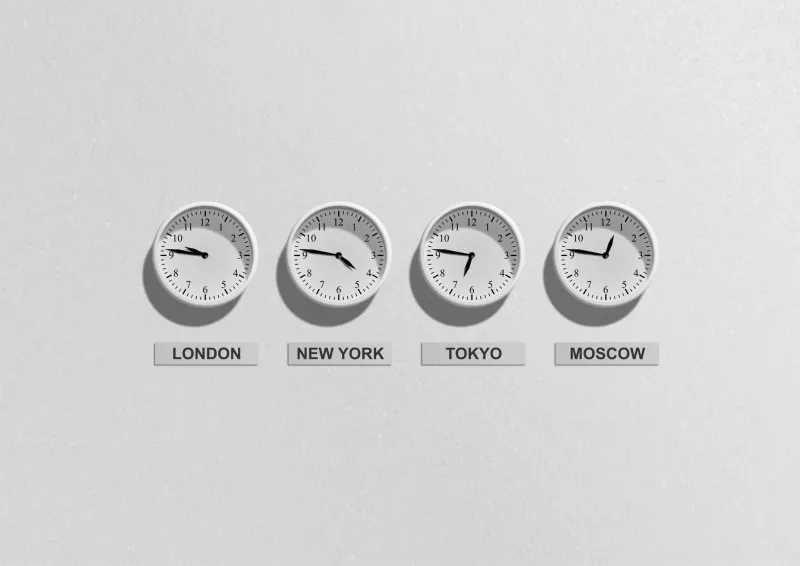
Photo by Photo by Shoeib Abolhassani on Unsplash on Unsplash
There's a particular kind of confidence that kicks in around 10 PM. The day's stress has dissolved, you've got a cold drink in hand, and the Asian sports markets are absolutely humming. Feels like the perfect setup, right? The problem is, that confident feeling is often your brain running on fumes — and fumes make for expensive decisions.
For Australian players betting on Asia-Pacific platforms, the overlap between local evening hours and peak Asian market activity is both an opportunity and a trap. Understanding why that trap exists — and how it's wired into your own biology — is genuinely one of the most underrated edges in sports wagering.
The Clock Problem Nobody Talks About
Australia sits in a fascinating time zone relationship with the rest of Asia. When markets in Tokyo, Seoul, and Kuala Lumpur are firing at full tilt — late evening local time — most Aussie players are sitting somewhere between 9 PM and midnight depending on their state. Sydney and Melbourne punters are arguably in the worst spot: alert enough to stay awake, but physiologically in the early stages of wind-down mode.
This isn't just about feeling a bit drowsy. Circadian rhythm research consistently shows that cognitive performance — specifically the kind of executive function you need to assess odds, manage risk, and resist impulsive decisions — begins to degrade meaningfully after about 10 to 11 hours of being awake. For someone who woke up at 7 AM, that window closes right around the time the Asian night markets are getting interesting.
The cruel irony? You probably won't feel impaired. That's part of the problem.
What Sleep Deprivation Actually Does to Your Betting Brain
Research from the Journal of Sleep Research and multiple behavioural economics studies has documented a consistent pattern: sleep-deprived individuals tend to overweight potential rewards and underweight potential losses. In plain English — tired people chase wins harder and ignore the downside risk more readily.
For punters, this maps onto some very recognisable behaviours:
- Chasing losses more aggressively than you would mid-morning
- Increasing stake sizes on instinct rather than calculation
- Dismissing pre-planned limits because the justification feels logical in the moment
- Misreading odds movements and assigning meaning to noise
A study from the University of Pennsylvania found that just 17 hours of sustained wakefulness produced cognitive impairment equivalent to a blood alcohol concentration of 0.05 — which, for context, is the legal driving limit in most Australian states. You wouldn't drive at that level. But you might absolutely punt at it.
The 'Second Wind' Trap
Any Australian who's stayed up late watching a cricket Test or an NRL final knows the phenomenon well. Around 10:30 PM, there's often a burst of alertness — a kind of second wind that makes you feel sharper than you were an hour ago. It's real, it's physiological, and it's deeply misleading.
What's actually happening is a brief uptick in cortisol, your body's stress hormone, as it tries to keep you functional. Neuroscience research describes this as a "wake maintenance zone" — a natural mechanism that evolved to keep humans alert during perceived threats. The catch is that while it temporarily boosts energy and confidence, it doesn't restore the full suite of rational decision-making that deeper rest provides.
For a punter watching a live Asian basketball market or a late-night Muay Thai card, that second wind feels like clarity. It's not. It's your body borrowing against tomorrow.
Why Asian Night Markets Are Particularly High-Risk
The nature of Asian sports markets adds another layer of complexity. Many of the betting categories available on Asia-Pacific platforms — live in-play markets, rapid-fire virtual sports, fast-moving casino tables — are specifically designed around quick decision cycles. They reward sharp, confident action.
That design works beautifully for a well-rested player with a clear head. For someone operating on a cognitive deficit at 11:30 PM, those same fast-moving markets become a perfect storm. The speed reduces the time you have to second-guess an impulse. The visual stimulation of a live stream keeps the cortisol ticking. And the social energy of a market in full swing — even experienced remotely through a screen — creates a kind of crowd psychology effect that amplifies risk tolerance.
Researchers call this "hot cognition" — decision-making driven more by emotional and physiological state than by rational analysis. Night markets, almost by structural design, are hot cognition environments. Tired brains are hot cognition brains. The combination is worth taking seriously.
Practical Strategies for Aussie Players Betting Across the Time Zone
None of this means you should avoid Asian markets after dark. The overlap is a genuine advantage for Australian players in terms of market access and variety. It just means going in with your eyes open — and a few simple habits in place.
Set your limits before you're tired. This sounds obvious but almost nobody does it. Establish your session budget and loss limits while you're alert — ideally before dinner — and treat those numbers as non-negotiable once the evening rolls around.
Use a betting journal. Tracking your session times alongside your outcomes over a few weeks will almost certainly reveal patterns you didn't know were there. Many Aussie punters who do this are genuinely surprised by how much their late-night results diverge from their afternoon performance.
Lean on structured markets. Pre-match betting on Asian sports — football, cricket, basketball — requires less real-time reaction than live in-play. If you're betting late, pre-match markets give your tired brain a better environment to operate in.
Apply a 'one extra click' rule. Before confirming any bet after 10 PM, force yourself to navigate away from the confirmation screen and come back. That small friction is enough to interrupt impulsive decisions without killing genuine opportunities.
Know your personal rhythm. Not everyone degrades at the same rate. Some people genuinely function well late. But most don't — and most overestimate how well they do. Honest self-assessment here is worth real money over the long run.
The Bigger Picture
Australia's time zone position relative to Asia is, as we've written about before on Lucky Bet Asia, genuinely one of this country's hidden advantages in the Asia-Pacific gaming space. The market access, the timing windows, the sheer variety of action available during Australian evenings — it's a legitimate edge.
But edges only pay out when you're sharp enough to use them properly. The biology of fatigue doesn't care how good your tipster is or how strong your read on the market might be. A tired brain is a compromised brain, and the Asian night markets are not a forgiving environment for compromised decision-making.
Know your limits. Set them early. And maybe — just maybe — let the 11:30 PM live parlay slide until morning.