The Backstreets of Asian Football: Where Aussie Value Hunters Should Be Scouting
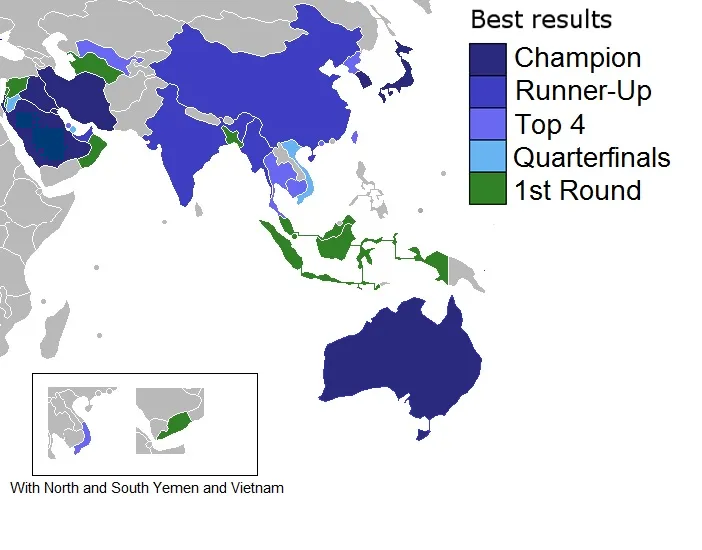
Photo: Roke, GFDL, via Wikimedia Commons
Saturday night in Australia follows a predictable script. The phone comes out, the EPL multis get built, maybe a dabble on the J1 or the Chinese Super League, and by midnight the whole operation has the same shape as every other punter's. Meanwhile, a quieter group is poring over J2 League team news and K League 2 promotion run-ins, and getting better prices for their trouble.
Second-tier Asia-Pacific football is not glamorous. That is precisely the point.
Why the Crowded Markets Are Crowded
The EPL and the major Asian top flights are where the money goes, so they are where the bookmakers put their best people. Prices are sharp, markets move fast, and the margins on the popular stuff are tight enough that beating them needs a genuine analytical edge.
That is fine if you have one. Most punters do not. They have a team they follow and a gut feel, and they are taking on a market that has already absorbed every piece of information they might have.
Second-tier leagues are a different world. The bookmaker attention is thinner, the models are less refined, and the odds are more likely to reflect lazy assumptions than genuine analysis. That is the gap.
What Second-Tier Asia Actually Looks Like
Japan's J2 League is the obvious entry point. Twenty-odd teams, a long season, a promotion race that produces genuine motivation swings, and enough public data to build a picture. Below that, the J3 League is thinner still and demands more caution, but the same logic applies.
Korea's K League 2 has the added wrinkle of a split format and playoff structure, which means late-season matches carry wildly different incentives depending on where a club sits. Teams pushing for promotion play differently to teams safe in mid-table, and the market does not always adjust quickly.
Thailand's second tier, Vietnam's lower divisions, Chinese League One and India's I-League all sit in a similar bracket: real competitions with real followers, but limited English-language coverage and limited bookmaker scrutiny. That combination is where a prepared punter can find an edge.
Where the Numbers Are Thinner, And Why That Helps
Thin markets cut both ways. You will not get the same limits as you would on a Champions League tie, and the price can move sharply on modest money. But the flip side is that the opening price is often built on less information, and it takes longer to correct.
A few places to look:
- Promoted and relegated sides adjusting to a new division, where the market leans on last season's numbers that no longer apply.
- Clubs with heavy squad turnover in the pre-season, where the bookmaker has not tracked the ins and outs.
- Long travel fixtures, especially in Japan where a 900km away trip genuinely affects performance.
- Mid-week cup fixtures that force rotation, where a second-tier side may rest their best eleven.
The common thread is information asymmetry. If you know something the model does not, you have a bet.
The Data Stack You Actually Need
You do not need a supercomputer. You need a routine.
Start with league and club official sites for team news, and do not skip the local-language press. Japanese and Korean outlets publish injury and suspension detail that never makes it into English roundups. Machine translation has made this far more accessible than it was a few years ago, and it is the single biggest upgrade most Aussie punters can make.
Second, track underlying performance rather than results. Shots, expected goals where available, home and away splits, and how a team performs against the top half versus the bottom half. A side sitting third on the table can be running on luck, and a side in twelfth can be underperforming its numbers badly.
Third, watch the schedule. Second-tier Asian leagues have congested fixtures, long bus trips and, in the hotter months, conditions that flatten games out. The market often prices these leagues like they are the EPL, and they are not.
Risks Worth Naming
Let us not pretend the backstreets are all upside.
Liquidity is the first constraint. Some second-tier Asia-Pacific fixtures attract very little matched money, and a large stake will move the price against you before you have finished clicking. If your bet size is meaningful, you may be looking at a market that cannot absorb it.
Coverage is the second. Not every second-tier league has reliable injury reporting, and some clubs are deliberately vague about squad availability. There will be matches where you simply cannot build a confident read, and the correct move is to skip them.
Integrity is the third, and it deserves a straight answer. Lower-profile leagues across the region have had their share of match-fixing concerns over the years, and the best defence is a bookmaker with robust integrity monitoring rather than a random offshore operator offering suspiciously generous prices on an obscure fixture. If a price looks too good in a league you do not know well, assume you are missing something rather than that you have found a gift.
A Repeatable Process
Pick two or three leagues. Not ten. Follow them properly for a full season, learn the clubs, learn the managers, learn which sides travel badly and which ones fold when they concede first. Build a small set of notes you update weekly.
The punters who do well in these markets are not geniuses. They are specialists. They know the J2 promotion race better than the average trader who covers twelve leagues at once, and that is the whole edge.
Second-tier Asia-Pacific football will never have the pub chat appeal of a Saturday night EPL derby. But the prices are softer, the information is less picked over, and the effort required is exactly the kind of thing most people will not do.
That is what a goldmine looks like in practice.