Under the Radar: Asia-Pacific Esports Betting Is More Than a Novelty
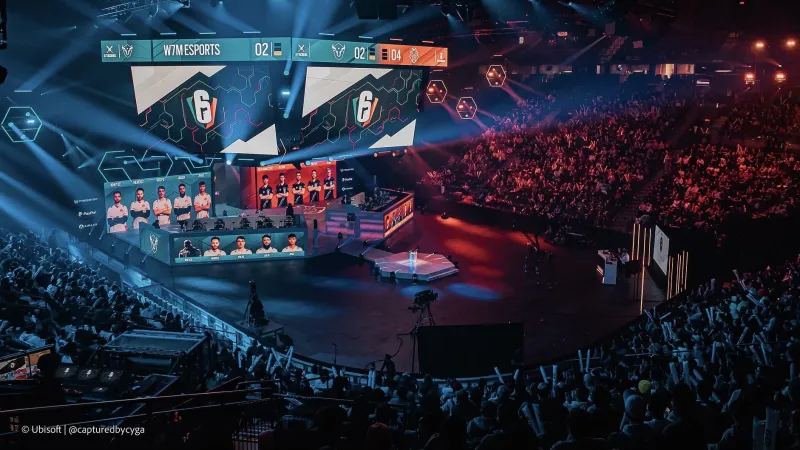
Photo: esports arena crowd asia tournament stage with big screens and players at desks, via cdn.sanity.io
Walk into any Australian sports bar and ask about esports betting and you will get one of two reactions: a blank stare, or a joke about teenagers in a basement. Meanwhile, in Seoul, Shanghai, Bangkok and Manila, esports is filling arenas and driving a wagering market that has grown into one of the most active verticals in the Asia-Pacific region.
In 2026, the gap between how seriously Asia treats esports and how casually Australia treats it is still wide. That gap is both an opportunity and a trap.
A Region That Lives and Breathes It
The numbers are not subtle. League of Legends, Dota 2, CS2, VALORANT and Mobile Legends: Bang Bang all have entrenched professional ecosystems across Asia-Pacific, with franchised leagues, salaried rosters, academy pipelines and broadcast deals. The VCT Pacific circuit and the LCK pull serious viewership. Mobile titles that barely register in Australia dominate entire national audiences in Southeast Asia.
That cultural weight matters for betting. Where a market has millions of engaged fans, bookmakers put real traders on it. Where a market has a handful of curious Aussies, they do not. So the pricing quality in esports is not uniform, and knowing which tier you are in is half the battle.
The Titles That Actually Matter
If you are coming from a footy background, the first adjustment is that esports is not one sport. It is a dozen different disciplines with completely different mechanics, and each one has its own betting logic.
League of Legends is the closest thing to a mainstream market. Regional leagues feed into international events, and the season structure is well documented. Dota 2 has a patch-driven meta that can flip a team's strength overnight. CS2 is map-based, which creates a whole layer of market structure beyond the match winner. VALORANT follows a similar map and agent logic. Mobile Legends and PUBG Mobile dominate Southeast Asian betting volume in a way that is almost invisible to Australian audiences.
MSI and Worlds for League, The International for Dota, the CS2 Majors, and the VCT international events are the anchor tournaments. Around them sits a constant stream of regional league play, which is where most of the actual betting happens.
How Asian Books Price It
Esports odds are built differently to football odds, and the difference starts with the map.
In a best-of-three, the market does not just price the series. It prices each individual map, the correct score, total maps, and often first-blood or first-objective props. Map veto is a genuine strategic layer. Teams with a shallow map pool get exploited in veto, and a punter who understands the veto can see a series price that looks wrong before the first shot is fired.
The other key variable is patch timing. When a balance patch drops, the meta shifts, and teams that adapted quickly gain an edge for a few weeks. Bookmakers who have not updated their models fast enough will still be pricing off the previous patch. That window is one of the more reliable edges in esports betting, and it requires nothing more than reading patch notes and watching a few games.
Roster changes matter just as much. A mid-season transfer can transform a team, and the market often takes a couple of weeks to catch on.
The Research Habits That Separate Winners From Hype-Chasers
Most Australian esports betting losses come from the same mistake: betting on a team because they are famous.
A proper process looks like this:
- Track the roster. Starting fives change more often in esports than in football, and a substitute can shift a team's ceiling significantly.
- Read the patch notes. Genuinely read them. Not the summary tweet, the actual notes.
- Understand the format. Best-of-one group stages produce more upsets than best-of-five playoff series, and the market does not always price that in properly.
- Check the schedule and travel. International events involve long-haul trips, jet lag and time zone disruption, and Asian teams travelling to Europe or North America are not always the same side you saw at home.
- Watch the veto. If you cannot explain why a team banned a particular map, you are not ready to bet the series.
That is a lot of work. It is also why the market is not fully efficient.
Liquidity: The Real Constraint
Here is the part the hype merchants leave out. Tier-one esports markets can be deep, but the moment you drop into regional leagues or academy competitions, liquidity collapses. Limits shrink, prices move on small money, and the gap between the displayed odds and what you can actually get filled at can be significant.
For Aussie punters, that means sizing matters enormously. A bet that looks like great value on screen may be impossible to place at the price you saw. Build your positions in smaller increments, and treat the tier-two and tier-three scene as a research ground rather than a place to park a large bankroll.
Integrity and the Lower Tiers
Esports has had well-publicised integrity issues, particularly in lower-tier and academy competitions where prize money is small and match-fixing offers are easier to make. A suspiciously generous price on an obscure fixture is not a gift. It is usually a signal.
Stick to regulated operators with visible integrity monitoring, avoid markets you cannot explain, and never bet on a competition where you cannot name three of the players.
Building a Process
Pick one title. Learn it properly for a season. Follow a single regional league before you branch out, and build your own notes on rosters, map pools and patch performance. Treat it the way a serious AFL punter treats the draft and the injury list.
Esports in Asia-Pacific is not a novelty. It is a mature, deeply followed, heavily traded market that happens to sit outside most Australian punters' field of view. That is exactly why it is worth a look, and exactly why it punishes anyone who wanders in without doing the reading.